
Only the Lonely

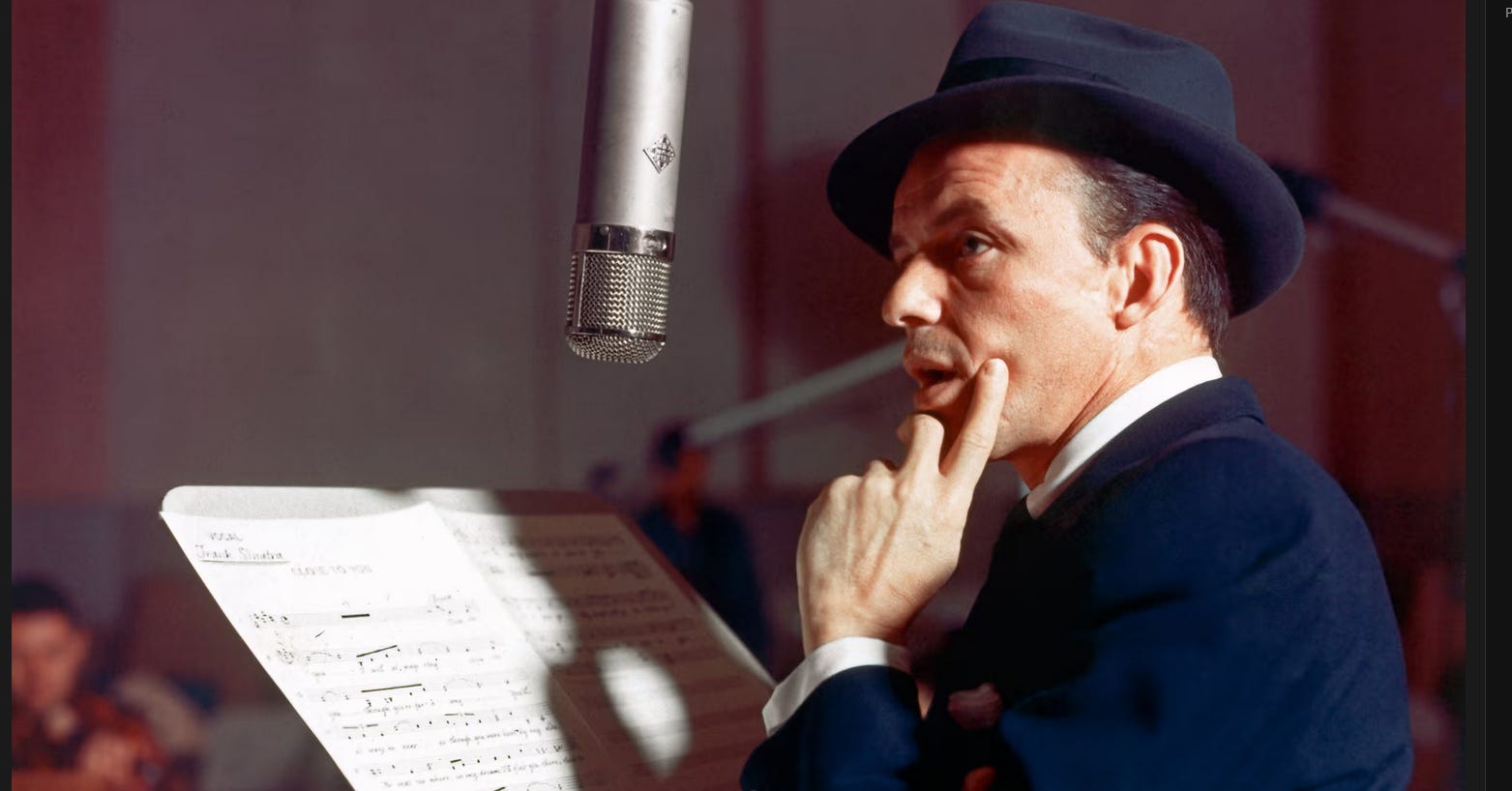
A collection of deeply sad, dark torch songs with themes of lost love and brokenhearted despair, “Frank Sinatra Sings for Only the Lonely” was released September 8, 1958 on Capitol Records.
At the time the album was recorded Sinatra was in the process of getting over Ava Gardner . . . but very much still carrying a torch. Author James Kaplan put it this way, “Ava Gardner was Sinatra’s late night obsession.”
This album is Sinatra at his bleakest. A heart rending journey through the sad complexity of how it feels to have a broken heart. His sorrow here palpable . . . suffering the anguish of the Ava Gardner breakup he channeled his personal despair into his art.
The album was further darkened by the fact that Nelson Riddle, who penned all the arrangements, had recently endured the deaths of both his mother and young daughter.
Befitting its title, a pensive sadness saturated the making of the album and greatly impacted the music . . . both singer and arranger delving deep into the emotions of lost love and personal sorrow across the album’s collection of torch songs.
Running from Only the Lonely, Jimmy Van Heusen and Sammy Cahn’s perfectly calibrated opener, to Ann Ronell’s dream-like Willow Weep for Me, the songs themselves intensify and heighten the moody despair. There’s the eerie dissonance of Robert Maxwell and Carl Sigman’s Ebb Tide, the poignancy of Matt Dennis and Earl Brent’s Angel Eyes, not to mention the expressive loneliness of Harold Arlen and Johnny Mercer’s seminal One for My Baby.
To illustrate the point, just listen to Sinatra’s reading of Bob Haggart and Johnny Burke’s What’s New?
Johnny Burke’s lyric is presented as a theatrical monologue of an informal encounter with a past love and Sinatra delivers it in a tone of wistful regret and longing. His emotional persuasiveness breathes life into the lyric. His performance so cinematic, it feels like you can see as well as hear this melodramatic story unfold.
Arranged by Nelson Riddle, What's New? opens with Ray Sims’ stark trombone twining through a dark, disconsolate motif. Sinatra’s delivers an agonizing first note entrance as he and Ray Sims begin an, oh so beautifully pensive, “pas de deux” musical dance.
What's new?
How is the world treating you?
You haven't changed a bit
Lovely as ever, I must admit
The denouement, the song’s startling “Of course you couldn’t know” surprise, the narrative’s dagger to the heart, packs an unexpected wallop. Sinatra delivers lyricist Johnny Burke’s melodramatic twist with the quiet vocal ache of a fractured heart.
And that solo from Sims . . . listen to the austere beauty of Ray Sims’ trombone. My word.
At the finale Riddle’s swirling strings surround Sinatra’s dramatic reading of the song’s shocking reveal . . . followed by his heart stirring low end vibrato delivery of ”I haven’t changed I still love you so” and Ray Sims’ coda.
An essay in elegant despair, the complexities of farewell and acceptance, are given a depth and gravitas fully comprehended by the great singer.
Sinatra planned to record “Frank Sinatra Sings for Only the Lonely” with arranger Gordon Jenkins but Jenkins was unavailable and so Sinatra turned to Nelson Riddle in what turned out to be an ideal choice.
Sinatra's mastery of phrasing, breath control, and emotional delivery, are all underscored by Nelson Riddle’s subtle, evocative orchestration mirroring each song's theme. Riddle’s arrangements include sweeping ensemble flourishes and an exquisite use of tonal colors that heighten the emotional impact of each track.
Frank Sinatra is an interpretive artist. There are many examples of his interpretive mastery but one I think really shines is Sinatra’s rendering of Jule Styne and Sammy Cahn’s Guess I'll Hang My Tears Out to Dry.
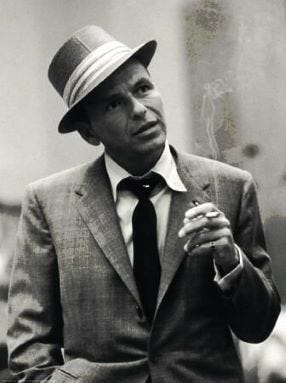
Sammy Cahn’s expressive lyric depicts one man's struggle to pull himself together following the heartbreak of lost love. Cahn’s lyric is a poetic lament of unrequited love . . . with a twist.
Sinatra was a master at employing a specific vocal approach. The musical term “Colla Voce” literally means “follow the voice.” Sinatra sings in a free manner at his own tempo and the orchestra follows him. This places the focus on the words not the notes . . . and it allows Sinatra’s vocal expressiveness to convey the pathos and poignancy of Cahn’s text.
As the recording opens, rhythm is suspended as Sinatra sings Cahn’s eight-bar prologue with Al Viola following him on gut string guitar. Sinatra’s voice is mellow and sad . . . but oh so beautiful.
The torch I carry is handsome
It's worth its heartache in ransom
The overture segues to the stately main theme full of dissonance and unresolved tension and Sinatra’s towering
When I want rain, I get sunny weather
I'm just as blue as the sky
Since love has gone... can't pull myself together
Guess I'll hang my tears out to dry
As the chorus unfolds Riddle’s orchestration is foreboding -- a primal heartbeat, the shudder of the strings, the ominous muted horns. Sinatra employing painstakingly precise phrasing, the orchestra following his lead with an almost a Wagnerian leitmotif. An anthem of anguish and suffering, just hear Sinatra’s soaring
Friends ask me out ... I tell them I'm busy
I must get a new alibi
I stay at home, and ask myself: who is he?
Oh good golly.
A horn driven orchestral lead to the bridge as Sinatra delivers a sublime, “Dry little tear drops, my little tear drops.” Riddle’s accompaniment like a shadow, almost colorless and motionless.
At the release a dramatic rising crescendo from the orchestra as Sinatra delivers a heart-wrenching . . .
Somebody said, just forget about her
So I gave that treatment a try
Strangely enough, I got along without her
And then that unexpected twist that just takes your breath away.
Then one day she passed me right by . . .
And the aching resignation of Sinatra’s “Oh well. I guess I'll hang my tears out to dry.”
The coda so quiet, so utterly devoid of self-indulgence, so sparse and so restrained, Sinatra’s voice lingers as if it could not bear to take leave of us. His low end hushed breath and the final syncopation of Bill Miller’s celesta so moving that you feel like you've just heard a lifetime of loneliness.
Incomparable stuff. No one communicates the sad complexity of how it feels to have a broken heart like Sinatra. No one.
At the time of the recording, Sinatra's divorce from Ava Gardner had just been finalized. The passion of their tumultuous love affair and roller coaster marriage was now formally ended. Tinged with sadness, Sinatra delivers a deeply moving performance of Goodbye, a song written in 1935 by one of Sinatra’s favorite orchestrators -- Gordon Jenkins.
Gordon Jenkins wrote Goodbye in the wake of the death of his first wife during childbirth. It is a heartbreaking farewell. In his authoritative book exploring popular song Alec Wilder called it one of the saddest songs ever written. (Goodbye was popular in a gently swinging version as the Benny Goodman orchestra’s closing theme).
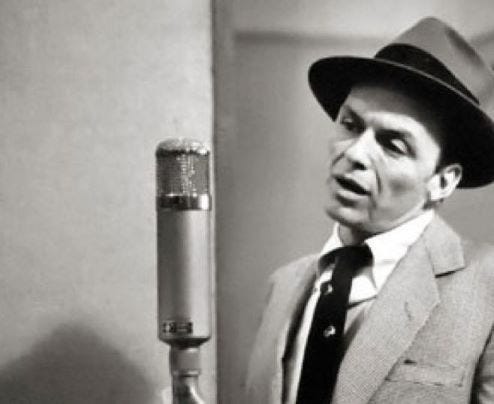
Sinatra seemingly channeled all his emotional turmoil and sadness over the Ava Gardner breakup into this poignant performance. His emotionally charged rendering of the song gives the impression of his own bittersweet goodbye. His virtuosity has never been more spine tinglingly on display than on this quintessential torch song.
A pensive prelude opens the recording. Nelson Riddle -- employing a fusion of bassoon, clarinet, cor anglais (English horn), French horn, cello and nuanced strings -- creates an introspective mood with a hint of desolation . . . Sinatra’s entrance breathes memories and regret into the hauntingly mournful lyric
I'll never forget you
I'll never forget you
I'll never forget how we promised one day
To love one another forever that way
We said we'd never say, "Goodbye"
As though a foreboding of lost love has suddenly hit him full force, Sinatra sounds the depths of love turned cold. Just listen to his agonized “But that was long ago, Now you've forgotten, I know.”
Good golly.
Sinatra expresses such bittersweet vulnerability . . . sustaining notes and phrases and extending vocal lines with a restrained and softly muted, “Let's say farewell with a sigh” before closing the phrase with a hushed “let love die.”
His pitch gliding from one note to the next while Riddle’s bassoons and lower strings mirror the melody. With quiet dignity and resignation Sinatra’s remembrance descends into a melancholy farewell “So you take the high road, and I’ll take the low, it’s time that we parted, it’s much better so.”
The recording's emotional resonance is heightened by Sinatra's deeply moving performance and Riddle's sensitive orchestration. The song's lyrics, the act of saying goodbye and acknowledging the end of a relationship, the push and pull of farewell and acceptance, are given such depth and feeling by Sinatra.
Riddle extends the motif with a sweeping ensemble horn and string orchestral solo rising to a soaring high point setting the stage for Sinatra’s dramatic conclusion at the release. His voice rising to a crescendo, Sinatra’s delivers a towering “But that was long ago” carrying his anguished legato line seamlessly over the bar to “Now you've forgotten, I know.”
With the last line of the stanza, his voice an inner turmoil of resignation and surrender, he sings “But kiss me as you go, goodbye” hovering agonizingly over the word “goodbye.” As if unable to let go, all but whispering it an emotionally choked deeply affecting three times.
Sinatra wanted a classical touch in the album’s orchestral voicings and so for these sessions the largest orchestra of any previous Sinatra album was assembled in Studio A of the Capitol Towers.
The orchestrations were all written by Riddle . . . but Riddle had a previous commitment to join Nat Cole on tour and so Felix Slatkin – who was a superb conductor -- stepped in to conduct the sessions.
The album reached No. 1 on Billboard's album chart and remained on the charts for 120 weeks. At 1959's inaugural Grammy Awards ceremony, the album won the award for Best Recording Package as well as a Grammy for the album’s cover art -- a Pagliacci like tears of a clown painting of Sinatra.
Notably, Sinatra never completed his intention to record Billy Strayhorn's ballad Lush Life for the album. The session material of Lush Life was included as part of the 60th anniversary deluxe edition of “Only The Lonely” released in 2018.
In 2025 actor and singer Seth MacFarlane released an album titled “Lush Life: The Lost Sinatra Arrangements” featuring arrangements of songs Sinatra had planned to record but never did including Lush Life.
“Frank Sinatra Sings for Only the Lonely” is a cornerstone of Sinatra's discography and a testament to his enduring legacy as one of the 20th century’s foremost interpretive artists. A deeply moving work of art, it is unquestionably one of the greatest albums of all time. A century from today people will still be deeply moved by this stunning album.
This is one fantastic review on the anniversary date. I juggle between this and In the Wee Small Hours of the Morning as my favorite Sinatra album. I usually go with Morning because I like the cover so much better than this one. I say to myself, One for my Baby is probably the best quarter to three song ever written…but then, who doesn’t lie awake and think about the girl…thanks again for this.
My favorite album by him.