
Mildred Bailey

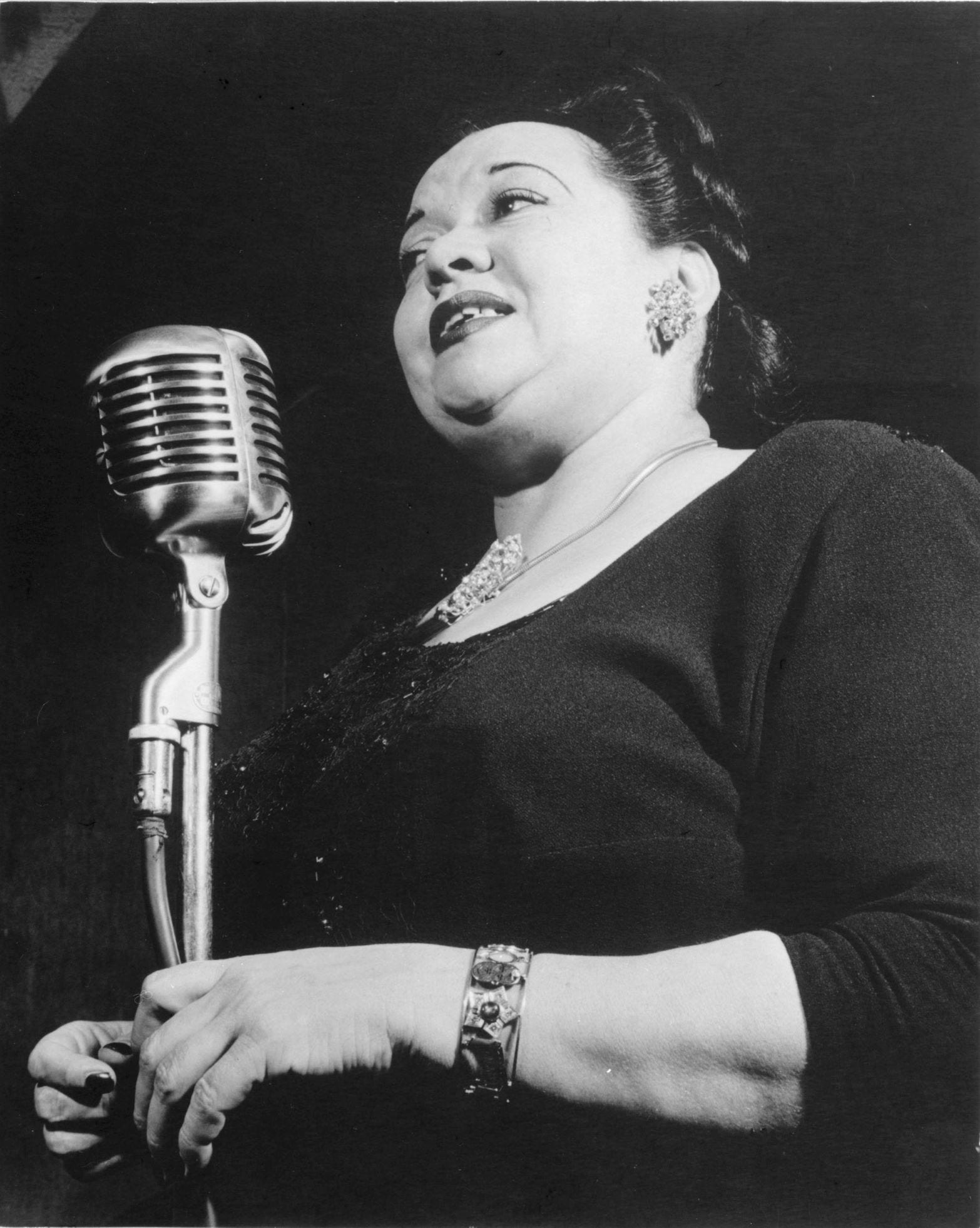
Widely praised and admired in her time, Mildred Bailey’s musical gift was remarkable. With her easily recognized airy soprano voice and her brilliant flair for easy flowing swing she was one of the preeminent jazz and pop singers of her generation. Mildred Bailey’s unpretentious natural style featured a soft, swinging delivery … and what she could do with rhythm and phrasing few could match.
She was an early mentor and champion of her friend Bing Crosby and like him she pioneered a seemingly effortless style of swing. The key to that effortless singing style was electronic amplification . . . microphone singing. Mildred Bailey was a microphone singer having learned early on how to use the new technology to project her voice.
Born Mildred Rinker in Washington state on February 27, 1907, she began life on the Coeur d'Alene Reservation in Idaho. Her mother Josephine was a Native American citizen of the Coeur d'Alene Tribe.
Mildred was just a youngster when the family moved to Spokane. She suffered a traumatic event in 1916 when her mother died suddenly. Her father remarried, creating an unhappy household. Mildred and her siblings were eventually pushed out by her stepmother. At age 17 Mildred was on her own.
In Spokane, her younger brother, Al Rinker, had become friends with Bing Crosby and the two of them began singing together as a duo. Mildred followed suit playing piano and singing in movie theaters.
She married and divorced a fellow named Ted Bailey who gave her the last name she ended up keeping. As Mildred Bailey she headed down to Los Angeles in the early 1920s where she found work playing piano and singing in nightclubs and speakeasies. Still in her teens, by 1925 she was the headlining act at several Hollywood night clubs.
Inspired by her success, she was joined in Los Angeles by her brother Al Rinker and Bing Crosby. She played Louis Armstrong records for Crosby urging him to take up Armstrong’s jazz phrasing and become a serious singer. Mildred helped Crosby and her brother form an act that landed them a job in 1927 as two of the Rhythm Boys with just about the biggest name in music at that time -- Paul Whiteman.
Billed as the "King of Jazz," throughout the 1920s Whiteman led an immensely popular dance band, and when in 1929, the troupe visited Los Angeles, Crosby and her brother returned the favor suggesting Whiteman give Mildred an audition. Duly impressed Whiteman added her to his orchestra. And with that Mildred Bailey set a trend becoming the first featured female vocalist in a big band.
She sang with Whiteman's band from 1929 to 1933, had a hit recording of All of Me, and saw her career take off. Bailey was soon recording with groups other than Whiteman, including many of the top jazz musicians of the era -- Bunny Berigan and Roy Eldridge, Coleman Hawkins, Johnny Hodges, the Dorsey Brothers, Benny Goodman, guitarist Eddie Lang and pianist Teddy Wilson.
One of the musicians Bailey met through Paul Whiteman was the xylophonist Red Norvo. Bailey and Norvo fell in love and were married for 12 years beginning in 1931. Alongside Norvo Mildred gained fame by recording what became her signature song, Rockin' Chair. Billed as “Mr. and Mrs. Swing,” between 1936 and 1939 Norvo and Bailey performed and recorded regularly together.
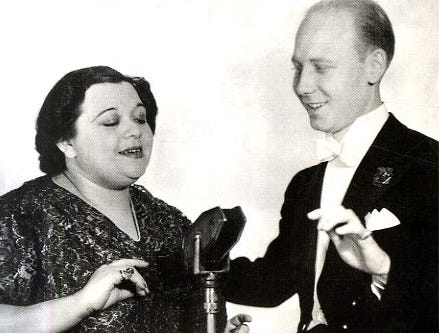
It was the Golden Age of radio and she was heard by a national audience as a guest singer on many syndicated radio programs . . . her popularity soared and she became closely identified with a number of popular songs including Someday Sweetheart, More than You Know, and The Lamp Is Low.
To illustrate Mildred Bailey’s lilting voice, impeccable timing and wonderful jazz phrasing, give a listen to her unconventional but simply marvelously 1938 recording of Lover Come Back to Me.
Keep in mind Lover Come Back to Me was written to be performed in the style of Viennese operetta. Composed in 1928 by Sigmund Romberg with lyrics by Oscar Hammerstein II for the Broadway show “New Moon,” it was performed by opera stars Lawrence Tibbett and Grace Moore in the 1930 film adaptation of the show, and most famously by the popular screen couple specializing in light opera Jeanette MacDonald and Nelson Eddy in the 1940 film also titled “New Moon.”
But Mildred Bailey is no light opera songstress . . . accompanied by Teddy Wilson at the piano and a swinging Herb Ellis guitar solo, Mildred drops the songs light opera origins and completely refashions Lover Come Back to Me as a delicious piece of syncopated swing easy jazz.
Promising a fun ride, a piano and guitar unison vamp opens the record setting a swing tempo and Mildred, her voice light and resonant, delivers a rhythmically perfect,
The sky was blue and high above
The moon was new and so was love
Mildred’s joyous vocal is joined by Teddy Wilson’s colorful riffs in a vibrant musical dance run through the verse.
Delivering a syncopated pulse, Mildred knows exactly where the beat is, her timing impeccable . . . and dig the way her phrasing and intonation create a swingy rhythmic percussive feel on, “where can you be.”
A lyrical Herb Ellis guitar solo is a happy fit, opening the door for Mildred, singing slightly ahead of the beat, to deliver a heavenly syncopated bending of the phrase . . .
I remember every little thing
You used to do, I’m so lonely
And at the close there’s that heady shouted crescendo . . .
oh lover
oh lover, come back to me
A great singer in full command. Wonderful stuff.
What a marvelous example of Mildred Baily’s meticulous phrasing, her unforced lilting voice and her swing easy style.
Mildred Bailey could indeed swing. But her light toned voice and her feel for phrasing also made her a wonderful singer of ballads. Bailey’s relaxed style could bring genuine pathos to a song. She had a way of opening a phrase by inserting a slight pause or shading intonation that was simply irresistible.
Mildred Bailey’s recording of I’ll Close My Eyes just knocks me off my feet. Her feathery vocal presents this wistful ballad with such tenderness and unfeigned sincerity . . . gets me every time.
Composed in 1945 by English bandleader Billy Reid with lyrics by the American songwriter Buddy Kaye, I’ll Close My Eyes is a war song (one of the most poignant and touching) whose lyric went through several revisions but didn’t get recorded until 1946 after the war ended.
Clarinetist Edmond Hall offers a gently swinging introduction to Mildred’s lilting opening vocal . . .
I′ll close my eyes to everyone but you
And when I do, I'll see you standing there
Sailing on top of Ellis Larkin’s piano fills and Edmund Hall’s clarinet lines Mildred glides from one note to the next with easy expressiveness . . . smoothly linking phrases together and stretching out words she paints a picture of a yearning heart waiting for a lover’s return.
From her first note to her last Mildred Bailey breathes austere simplicity and a depth of genuine feeling into this winsome song with its poignant lyric. Just a wonderful record.
Mildred and Red Norvo divorced in 1942 but remained close. She continued to perform and record with Noro but kept on as a solo act as well regularly performing in New York nightclubs and during the mid-'40s staring in her own nationally syndicated radio show.
Benny Goodman led the hottest big band of the swing era and Bailey recorded a lot with Goodman. One delicious example of Mildred Bailey at her brilliant, swinging best is on display in a buoyant 1939 recording of Bluebirds in the Moonlight recorded with Goodman.
Not only was his band filled with formidable jazz musicians, Benny himself was one of the greatest clarinetists of all time
The Goodman band sets a swinging unison groove with Benny taking a virtuoso solo clarinet break before Mildred Bailey hops on board sailing through the chorus . . . her light soprano voice, clear articulation, jazz phrasing and rhythmic syncopation swinging the melody. Benny and the band jump back in soaring through the out chorus to bring the piece to an exultant conclusion.
The hot excitement of the Benny Goodman band, Benny’s dazzling clarinet, the shuffle beat of Nick Fatool’s drum and Mildred Bailey’s bouncy swinging vocal . . . this is classic “Big Band Swing.”
Suffering from serious health problems, in and out of hospitals, Mildred Bailey stopped performing in clubs after 1945 (but continued to occasionally record). She had diabetes compounded by her destructive lifestyle behavior. Plus-sized and portly she couldn’t control her weight – food, shopping and overspending were her downfall. On several occasions Bing Crosby had to come to her financial rescue.
At the age of 44 Mildred Bailey died of heart failure on December 12, 1951.
Jazz historian Stanley Dance called Bailey “one of the greatest jazz singers. A legend in her own time.” One of the foremost singers of popular song during the Depression years of the 1930s, Mildred Bailey influenced a generation of singers from Bing Crosby to Frank Sinatra, Tony Bennett and Rosemary Clooney. Indeed Bailey’s important place in jazz history has long been hailed by musicians and singers, not least Peggy Lee who adored her.
It’s no longer in print but the 2000 boxed set album The Complete Columbia Recordings of Mildred Bailey has wonderful biographical and musical liner notes from renowned Bailey connoisseur and jazz authority Will Friedwald.